PAUL GRAHAM SAYS GTM IS BOGUS, AND THE MARKET KEEPS PAYING BILLIONS FOR IT
Vibecoding hits a $13.3B valuation, Pipedrive buys its own best app, the hottest job in AI is half seller half builder & how Matt Swulinski builds $100M growth enginess…
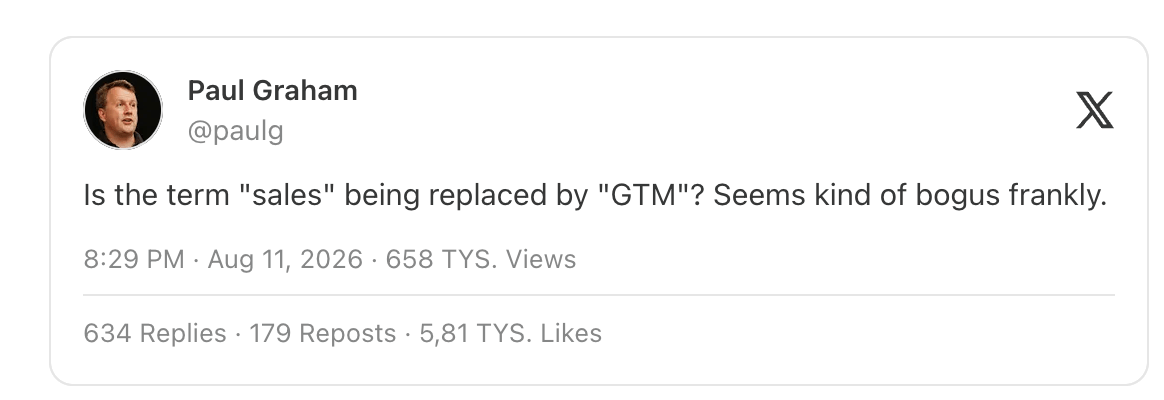
Is the term ‘sales’ being replaced by ‘GTM’? Seems kind of bogus frankly.”
Paul Graham, this week. 657,000 views and my feed hasn’t shut up about it since.
Every few years sales gets a new coat of paint and a conference circuit to go with it. But while that post was going viral, investors put $13.3 billion on vibecoding. Pipedrive bought the best app on its own marketplace. A headhunter firm counted exactly 2,000 people in America who can do the hottest job in AI, which happens to be a seller who can build. Nobody moves that kind of money around a buzzword.
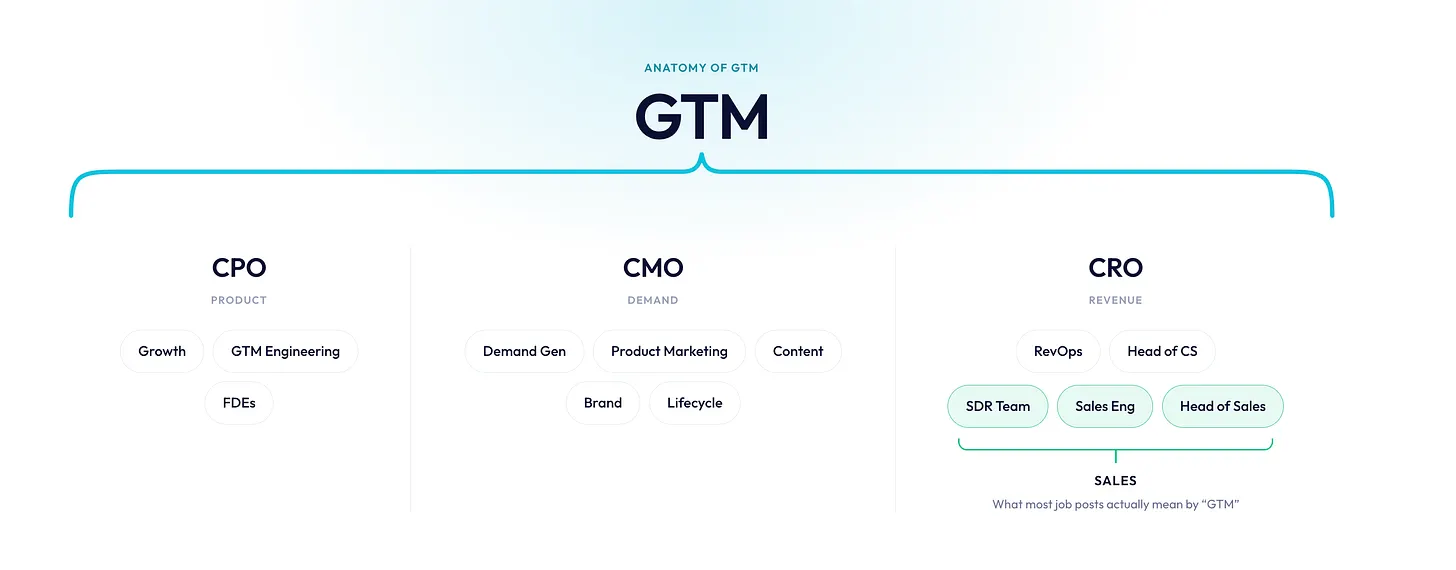
So here’s my answer to Paul. GTM is not sales renamed. Sales was always responsible for revenue. GTM is what you call it when you stop running revenue as a department and start running it as one machine. Signals, data, outbound, product, follow-through. One system. Some people sold like that ten years ago and called it sales, and honestly? Same thing. They just didn’t have a word for it yet.
Let’s get into the trenches.
The tool that kills SaaS contracts is now worth $13.3 billion 💸

Remember the CEO from 003 who vibecoded away a $600K Salesforce bill? The market just put a $13.3 billion price tag on his weapon.
The raw numbers first. Lovable: $400 million Series C, $13.3 billion valuation, double December. Half a billion in annualized revenue. Employees at two-thirds of the Fortune 500 already building on it. Oh, and Cognition (the company behind Devin) is reportedly in talks at $40 billion. Fine, you’ve seen big rounds before. Skip the round then, read the customers.
Nursa is retiring 10 SaaS systems because its teams build their own tools now. Viver de IA in Brazil runs its CRM and its AI SDR workflows on Lovable. Not a prototype. Their actual revenue machine, for 1,200+ clients. And the round itself is titled “to help people run their businesses,” which tells you where this is going.
One more thing. I checked the investor list twice because it read like a typo: HubSpot Ventures and Salesforce Ventures are in this round. The CRMs are funding the build button pointed at their own contracts.
Read the round here!
Read Lovable’s announcement here!
Damian’s insight:
Hard to walk past this one. In the last issue we wrote about a company cancelling a $600K subscription to build its own tools, and now the tool for building them is valued at $13.3B.
It is, without a doubt, a great time for builders. Tools like Lovable keep getting better and more accessible. You no longer need to be a technical person to stand up a database, and connecting those pieces into one system takes weeks, not months or years. I think that today, selling SaaS or services, the question “who is our competition” is not enough anymore.
The real question is: can the client do this themselves? DIY is becoming your biggest competitor. Think about that when you calculate ROI for your client, because on a big check, Lovable and tools like it can cause you some very painful churn.
Pipedrive just bought the best app on its own marketplace 🧩
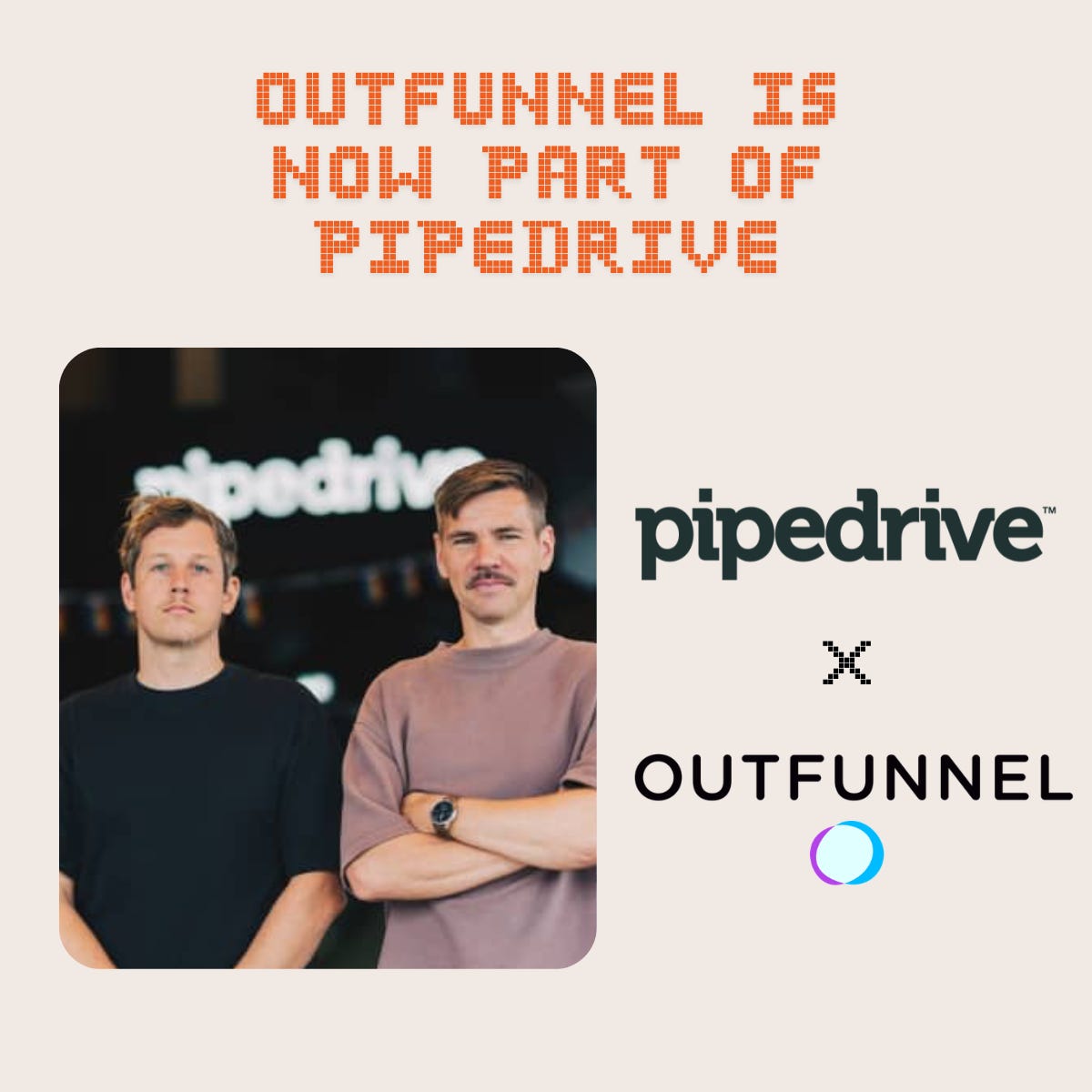
The CRM didn’t add a feature. It absorbed one.
August 5, Pipedrive acquired Outfunnel. Top-rated app on its own Marketplace, Estonian, keeps sales and marketing data in sync between the CRM and tools like Mailchimp and Klaviyo. Over 500 businesses run on it. CEO Paulo Cunha said the quiet part out loud: “A CRM that doesn’t connect with your marketing tools is only solving half the problem.” So the add-on customers had to go find becomes part of the product. Simple as that.
Quick sidebar, because I love the subplot more than the deal. Outfunnel’s co-founder Andrus Purde? Pipedrive’s early Head of Marketing. His brother? One of Pipedrive’s five founders. His own words: “Exits are a big part of startup life, but it seems mine is through a revolving door.” The ecosystem raised the app, the platform bought it home.
The play is simple. Salesforce buys AI startups to add features. Pipedrive buys the tool that connects sales and marketing. Different scale, same goal: fewer tools, one CRM in the middle. A small team can’t afford five tools with five versions of the truth.
Read the announcement here!
Damian’s insight:
If I asked you which software has the highest adoption in sales, what would you say?
The CRM, obviously! Well, maybe Outlook too, but that’s a separate story. If success with AI is not about the number of features but about adoption (what good is the best workflow if salespeople don’t use it), then isn’t the CRM, a GTM platform that naturally holds millions of users, exactly what AI needs to grow adoption?
Watch what the giants are doing: Salesforce keeps absorbing AI startups, HubSpot rolls out Agent Hub, and Pipedrive buys the best app on its own marketplace. Think about that if you want your GTM team to be more AI native.
The hottest job in AI is a seller who builds, and there are only 2,000 of them 🛠️
“Not 2,000 available. 2,000 total.”
That line is from a Christian & Timbers study, shared exclusively with TechCrunch, and it’s about forward-deployed engineers: people who work inside the customer’s company and build, tune and ship AI workflows until the ROI shows up. How hot is this exactly? Demand projected to grow 2,100% by the end of the year. In January, maybe one company in ten planned to hire FDEs. By the end of Q2, seven in ten. Consulting firms are standing up FDE teams of 20 to 100 people. Some enterprises buy Palantir software mainly to get access to Palantir’s people, which might be the strangest sales motion I’ve heard about this year.
Strip the title and look at the job. Not an engineer in a back room. Not a rep with a deck. The person who sits with the customer, understands their process, and builds the workflow that makes money. Half discovery call, half deployment. OpenAI and Anthropic built entire ventures around these people, and the elite bar is tens of millions of dollars in ROI impact, usually starting where? Lead generation. GTM. Of course it is. Meanwhile Wall Street, per the study’s author, is about to start punishing companies that burned millions on AI with nothing to show. The FDE is who makes the number real.
Read the FDE story here!
Damian’s insight:
Is the FDE actually something new? Combining soft skills with hard technical knowledge has been worth its weight in gold for a long time, just under different names. SAP consultants spending months on implementations, connecting business with engineers. Sales Engineers who could sell technology projects like the robotization of industrial plants.
Today AI needs exactly the same thing. Someone who knows what the business needs and speaks its language, but on the other side has a technical background, understands what the engineer is saying, and can model or program something on their own. This is the hottest role for any salesperson who understands technology.
And Palantir is not the only one that needs these people.
If you’re a BDR or SDR looking for a technical path, FDE and GTM Engineer should be the first phrases you type into the search bar.
Nex, the best demo I’ve seen this year 🧰

Nex, fresh out of Y Combinator, calls itself “Claude Cowork for high-volume workflows, starting with GTM.” You describe the goal in plain language, it builds and runs the workflow across 1,000+ integrations. The repetitive parts get written as real code, so you’re not burning model limits on grunt work. Their cost line: runs “for the price of a coffee.”
What sold me was the onboarding call. Thousands of HubSpot records audited live. Missing fields flagged, zombie deals called out, fixes running before the call ended. Built by ex-HubSpot founders, backed by Dharmesh Shah, HubSpot’s founder. GTM first, then finance, support, recruiting. YC is clearly not letting go of the GTM wave. After this demo, I get it.
See the launch here!

Matt Swulinski built a $100M growth engine, twice ⚙️
Marketing hire #1 at Wispr Flow. Growth at Superhuman before that. Now Head of Growth at Viktor, the Accel-backed AI coworker. And somewhere along the way, an AI marketing OS that ran 100 newsletter sponsorships a month on autopilot.
Matt went on 20VC with Harry Stebbings to unpack how he builds growth engines. The resume alone makes the argument. First marketing hire at Wispr Flow, growth from pre-launch to millions of users, then the same playbook again at Viktor, sharper each round.
The sponsorship machine is the detail I keep coming back to. A hundred newsletter deals a month. Found, negotiated, executed, by a system he built, while the team stayed small. Not “AI helped with the copy.” That’s a growth team behaving exactly like the FDEs a few stories up. Don’t do the task. Build the machine that does the task, then point it at revenue.
What would I steal from Matt? Two things, maybe three. Treat distribution like an engineering problem, so when a channel works, automate the buying of it. Be the first hire who builds systems instead of campaigns, campaigns end, systems compound. And stay lean on purpose, because the whole point of an AI-native growth stack is that three people move like thirty.
Watch the episode here!
Damian’s insight:
This is where we get to the heart of GTM: distribution. Sometimes all it takes is one hack that works, and running it at scale puts your organization into hypergrowth. Matt touches on a lot of things that matter for startups.
Stay lean, build the system, test and learn, but once you’ve learned, hit the gas!
Harry picks his guests well. Carles Reina delivered when he told us how he sees today’s GTM, and Matt does the same from a slightly different angle.
You simply have to watch this one.