What Is Raynet CRM?
Raynet CRM is a customer relationship management platform designed to support the daily work of B2B sales teams, sales managers, and back-office departments. It centralizes customer data, contacts, sales opportunities, and communication history while allowing businesses to adapt the sales process to their own commercial model.
Unlike many enterprise CRM systems, Raynet focuses on practical usability rather than technical complexity. Companies can implement a structured sales process without lengthy configuration projects or extensive IT involvement.
For sales organizations, the biggest advantage is the balance between simplicity and flexibility.
Instead of forcing teams into predefined workflows, Raynet CRM adapts to the way they already sell. That makes adoption easier while helping organizations standardize sales operations as they grow.
By keeping customer information, opportunities, and sales activities in one place, Raynet improves collaboration across the sales team.
Sales managers gain complete visibility into pipeline performance, customer relationships, and team activity, while sales representatives spend less time searching for information and more time engaging with customers.
As organizations expand, Raynet CRM continues to support process optimization by allowing companies to refine workflows without replacing the underlying CRM system.
Dashboard Overview
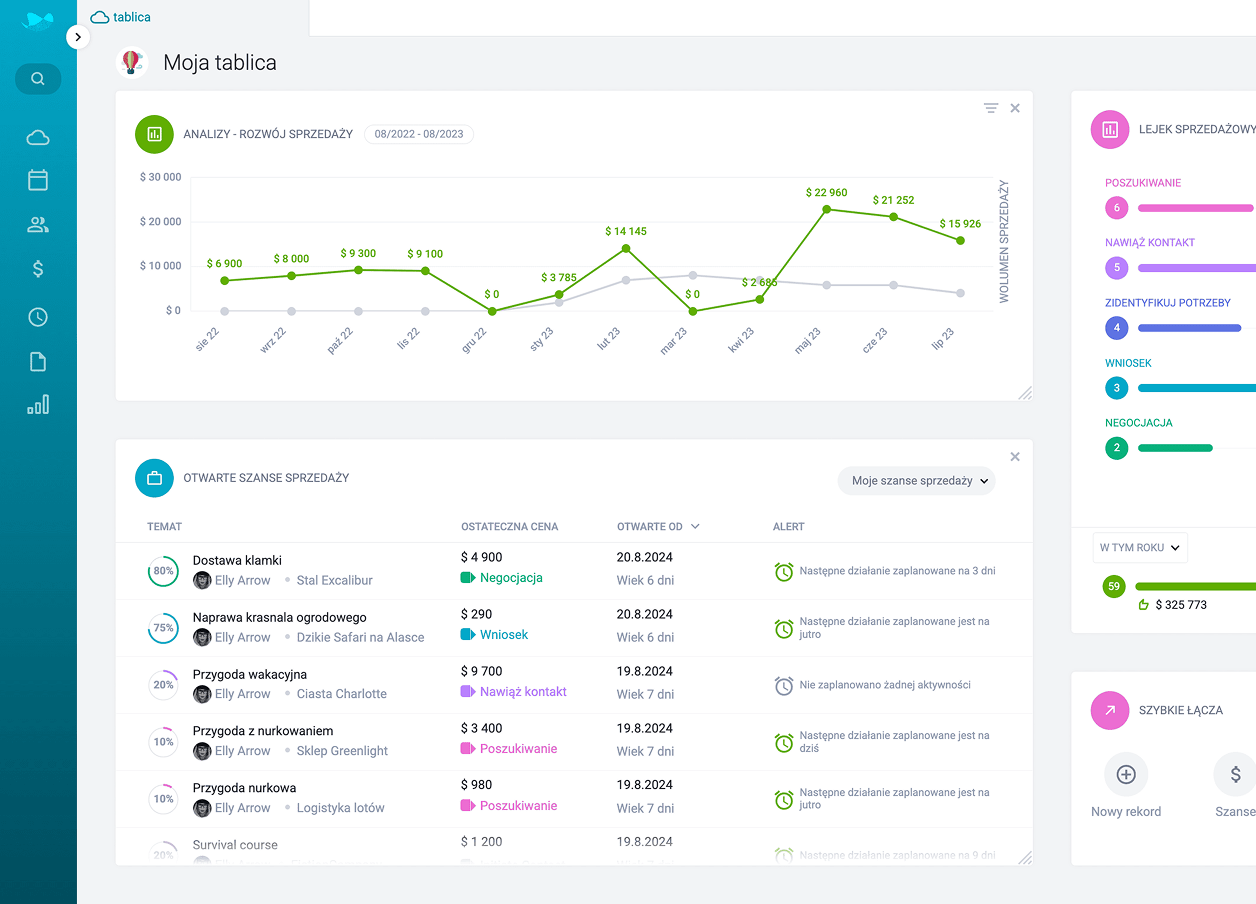
The Raynet CRM dashboard provides a real-time overview of sales performance.
Users can immediately access information about:
- Sales pipeline
- Active opportunities
- Sales stages
- Assigned tasks
The clean interface makes it easy to monitor ongoing sales activity without relying on additional reporting tools.
For sales managers, the dashboard becomes the operational control center.
Instead of collecting updates from multiple sources, they can evaluate pipeline health, monitor deal progress, and identify issues using live sales data.
For sales representatives, the dashboard creates clear priorities by highlighting upcoming tasks and active opportunities.
That transparency improves collaboration while reducing operational complexity across the sales organization.
The dashboard also supports long-term B2B sales management by making customer relationships, pipeline progress, and sales performance visible throughout the organization.
Raynet CRM Features
Raynet CRM combines customer management, lead management, opportunity tracking, reporting, and sales analytics in one platform.
Core features include:
- Contact management
- Lead management
- Opportunity management
- Reporting and analytics
Each customer record stores the complete relationship history, including:
- Notes
- Meetings
- Sales activities
- Quotes
- Communication history
Rather than depending on individual sales representatives to remember previous conversations, organizations build a centralized knowledge base that supports every stage of the sales process.
This creates consistency across the entire customer journey—from first contact through negotiation, closing, and post-sales support.
Detailed customer records also provide valuable insight for sales managers, making it easier to analyze sales performance, identify process bottlenecks, and improve commercial decision-making using reliable data.
By standardizing sales activities and centralizing information, Raynet CRM helps organizations create a more predictable and scalable sales operation.
Contact Management and Customer Database
Contact management in Raynet CRM helps businesses build a structured customer database where every record contains complete information about decision-makers, communication history, and organizational relationships.
Instead of storing customer information across spreadsheets, inboxes, and disconnected tools, the entire sales team works from one centralized customer record.
Raynet CRM supports both simple contact structures and complex B2B organizations with multiple stakeholders involved in the buying process.
This makes it much easier to understand customer relationships and prepare for longer, multi-stage sales cycles.
Each customer profile gives instant access to:
- Contact information
- Previous conversations
- Notes
- Quotes
- Sales activities
Having the complete customer history in one place improves communication, reduces the risk of losing important information, and helps maintain continuity even when account ownership changes.
Raynet CRM also supports customer segmentation, allowing sales teams to organize accounts more effectively and tailor their sales approach to different customer groups.
Sales Process Management and Sales Pipelines
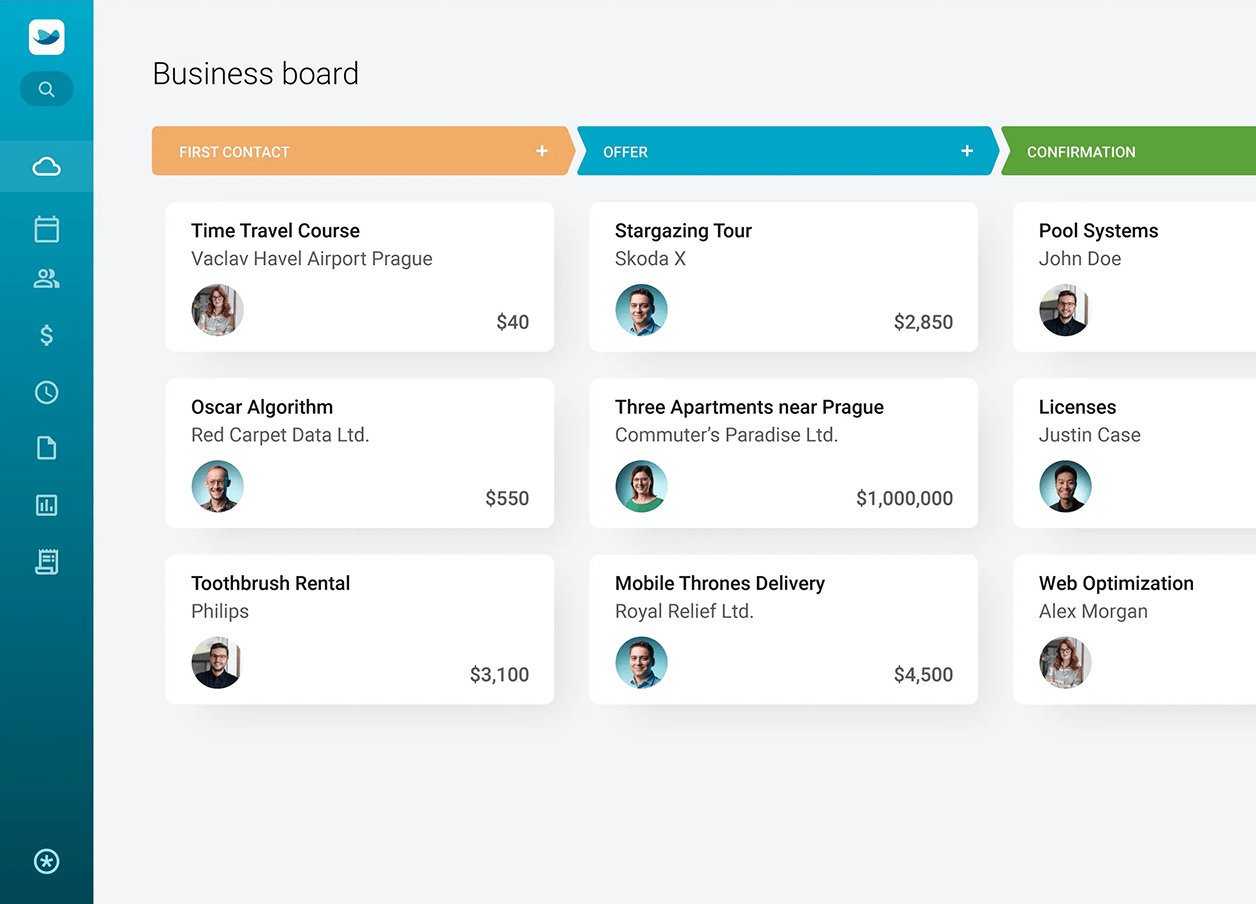
Raynet CRM allows businesses to configure sales pipelines that reflect their own sales process rather than forcing them into predefined workflows.
Companies operating in different industries can customize pipeline stages to match their commercial model while maintaining a standardized sales process across the organization.
Well-structured sales pipelines help teams:
- Monitor deal progression
- Identify bottlenecks
- Forecast future revenue
- Improve conversion rates
For B2B organizations managing complex buying journeys, this flexibility is particularly valuable.
Sales pipelines can represent both simple transactional sales and longer enterprise buying processes involving multiple stakeholders.
Each stage has a clearly defined purpose, making it easier for sales representatives to understand what actions should happen next while giving managers better visibility into pipeline performance.
The pipeline also serves as a powerful analytical tool.
Sales managers can evaluate conversion rates between stages, identify weak points in the sales process, and make operational decisions based on measurable performance rather than assumptions.
Opportunity Management and Pipeline Visibility
In Raynet CRM, every sales opportunity is connected to a customer, related activities, and supporting documents.
This provides complete business context throughout the sales cycle.
Pipeline Management allows organizations to monitor:
- Opportunity value
- Pipeline health
- Deal progression
- Forecasted revenue
Sales managers gain an accurate picture of current sales performance while sales representatives can prioritize opportunities with the highest commercial potential.
Because every opportunity is connected to the customer record, previous communication and sales history remain available throughout the buying process.
That continuity is especially valuable in B2B environments where sales cycles often last several months.
Pipeline visibility also improves forecasting.
Managers can evaluate expected revenue, identify trends, allocate resources more effectively, and optimize sales execution using real-time pipeline data.
Sales Automation, Notifications, and Workflows
Raynet CRM includes automation features that help sales teams maintain consistent execution without relying on manual reminders.
Automation supports activities such as:
- Task reminders
- Notifications
- Workflow rules
- Follow-up scheduling
Instead of depending on memory, sales representatives receive automatic reminders about upcoming activities and important customer interactions.
For managers, automation improves process consistency across the entire sales organization.
Standardized workflows ensure every opportunity follows the same structured sales process regardless of which sales representative owns the account.
As organizations grow, automation becomes increasingly valuable.
Higher lead volumes and larger customer databases can be managed efficiently without sacrificing response times or process quality.
Rather than spending time tracking deadlines and administrative tasks, sales teams can focus on customer conversations and revenue-generating activities while Raynet CRM manages operational workflows in the background.
Creating Quotes and Managing Documents
Raynet CRM allows sales teams to create professional sales quotes directly within the platform.
Every quote is linked to:
- The customer record
- The sales opportunity
- The current stage of the sales process
This keeps negotiations organized while ensuring that every document remains connected to the wider sales context.
Instead of working across multiple folders and disconnected files, sales representatives manage all commercial documents from one centralized system.
Managers also benefit from greater visibility.
They can immediately see:
- Which quotes have been sent
- Which opportunities remain active
- Where each negotiation stands
By connecting quotes with customer records and pipeline stages, Raynet CRM improves communication, reduces administrative work, and creates a more transparent sales process.
Standardized document management also helps companies present a more consistent and professional image throughout every customer interaction.
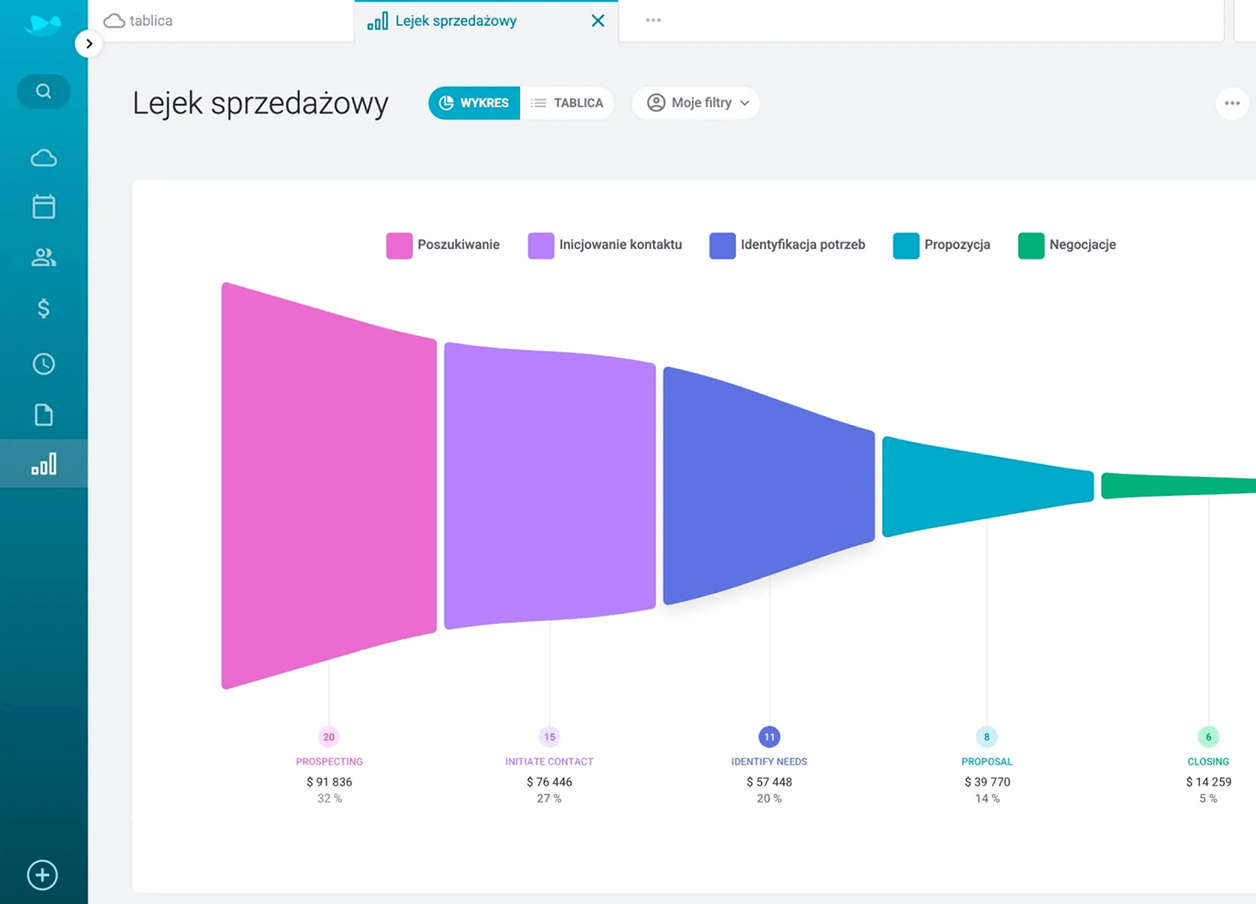
Reporting and Sales Analytics
Raynet CRM includes built-in reporting and analytics designed to support data-driven sales management.
Sales leaders can monitor:
- Team performance
- Pipeline metrics
- Sales trends
- Conversion rates
Because all sales data is stored within one platform, reports are generated from a single source of truth rather than multiple disconnected systems.
This reduces manual reporting while improving the quality of commercial decisions.
Analytics are directly connected to sales opportunities, pipeline stages, and sales activities, making it easier to identify bottlenecks and optimize the sales process.
Instead of relying on intuition, managers gain measurable insight into what drives revenue growth.
Over time, reporting also supports a stronger performance culture by making sales results transparent across the organization.
Raynet AI: Artificial Intelligence in Sales
Raynet AI extends the CRM by helping sales teams analyze customer data and prioritize commercial activities.
Rather than replacing salespeople, AI supports better decision-making.
It helps identify:
- High-potential sales opportunities
- Pipeline trends
- Customer behavior patterns
- Sales priorities
For organizations managing large customer databases, AI significantly improves how sales representatives allocate their time.
Instead of treating every opportunity equally, teams can focus on prospects with the highest likelihood of conversion.
Managers also benefit from AI-powered analysis.
Sales performance becomes easier to evaluate, forecasting becomes more accurate, and opportunities can be prioritized using real sales data instead of assumptions.
As CRM platforms continue evolving, AI is becoming an increasingly important layer that enhances—not replaces—the existing sales process.
Integrations and the Raynet Ecosystem
Raynet CRM integrates with many of the tools commonly used across sales and marketing organizations.
Typical integrations include:
- Email platforms
- Calendars
- Analytics tools
- Business applications
By synchronizing information across systems, Raynet eliminates duplicate data entry and improves collaboration between departments.
Instead of maintaining separate databases, organizations create one connected commercial environment where information flows automatically between systems.
This improves reporting accuracy while allowing sales, marketing, and customer support teams to work with consistent customer data.
Mobile App for Sales Teams
The Raynet mobile app gives sales representatives access to CRM data wherever they work.
From a mobile device, users can:
- View customer records
- Manage sales opportunities
- Update activities
- Access communication history
For field sales teams, this means customer information is always available before meetings and can be updated immediately afterward.
Real-time updates improve data quality while reducing delays in reporting.
The mobile app also helps sales representatives stay organized by keeping tasks, opportunities, and customer information synchronized regardless of location.
As a result, sales teams become more responsive while maintaining a consistent sales process both inside and outside the office.
Raynet CRM for Small Businesses
Raynet CRM combines ease of use with the flexibility to grow alongside the business.
Small companies can implement the system quickly without complex technical projects while still gaining access to structured sales management from day one.
Instead of relying on spreadsheets and disconnected tools, businesses can immediately organize:
- Customer data
- Sales opportunities
- Lead management
- Sales activities
As the company grows, Raynet CRM grows with it.
Additional sales pipelines, reports, automation, and workflows can be introduced without replacing the CRM platform.
That makes Raynet a long-term solution rather than a temporary tool for early-stage businesses.
For growing sales organizations, the CRM becomes more than a customer database.
It becomes the operational foundation for scalable sales.
Advantages of Raynet CRM
One of Raynet CRM’s greatest strengths is its combination of simplicity and business flexibility.
The platform is designed to help sales teams organize customer relationships without creating unnecessary complexity.
Key advantages include:
- Intuitive interface
- Flexible sales process configuration
- Centralized customer information
- Built-in sales management tools
Every customer record provides immediate access to communication history, sales opportunities, and previous interactions.
Sales representatives spend less time searching for information and more time working with customers.
Managers benefit from greater transparency, making it easier to monitor pipeline performance and coordinate team activities.
Potential Limitations
Like any CRM platform, Raynet CRM requires organizations to establish consistent sales processes.
Companies moving from spreadsheets or highly unstructured workflows may need to adjust existing habits during implementation.
Common challenges include:
- Standardizing sales activities
- Encouraging consistent CRM usage
- Adapting internal processes
These challenges are typically temporary.
Once the system becomes part of daily operations, businesses usually gain better visibility, stronger collaboration, and more predictable sales execution.
Customer Support
Raynet CRM provides documentation, training resources, and customer support to help organizations implement and use the platform effectively.
Access to onboarding materials makes it easier for sales teams to understand the system while reducing the time required to achieve full adoption.
Good customer support becomes particularly valuable during implementation, helping organizations resolve configuration questions quickly while minimizing operational disruption.
Training resources also encourage continuous learning as businesses expand their use of the platform.
Supporting Daily Sales Operations
Raynet CRM is designed around everyday sales activities rather than occasional reporting.
Sales representatives use the platform to manage:
- Tasks
- Customer interactions
- Sales opportunities
- Follow-up activities
Because every team member works from the same customer data, collaboration becomes significantly easier.
Everyone understands:
- Which opportunities are active
- What actions have already been completed
- What should happen next
Managers gain real-time visibility into sales execution without requesting manual updates from the team.
This creates a more transparent and accountable sales organization.
A 360° Customer View
Raynet CRM provides a complete 360-degree view of every customer relationship.
Customer records connect:
- Contact information
- Communication history
- Sales opportunities
- Activities
- Documents
Instead of switching between multiple systems, sales teams access everything they need from one centralized workspace.
This unified view improves customer experience, strengthens collaboration, and supports more informed commercial decisions throughout the entire sales process.
Is Raynet CRM Worth It?
For organizations looking to introduce structured B2B sales management without the complexity of enterprise CRM systems, Raynet CRM offers a strong balance between usability and functionality.
Its biggest strengths include:
- Easy adoption
- Flexible sales pipelines
- Strong opportunity management
- Centralized customer data
- Sales automation
- Built-in analytics
Raynet CRM works particularly well for companies that want to standardize their sales process while maintaining flexibility as the business grows.
Rather than overwhelming users with unnecessary complexity, the platform focuses on helping sales teams sell more effectively through better organization, visibility, and collaboration.