Product-Market Fit: How to Validate Demand Before You Scale
Product-market fit doesn’t happen inside the product. It happens when your Go-to-Market strategy forces the product to confront real market demand. A team can spend months building new features, but it’s only after launch that they discover whether customers are actually willing to pay. That’s the point where Go-to-Market stops being a marketing initiative and becomes a business decision-making framework.
One of the biggest mistakes companies make is treating a product launch as a marketing campaign. Campaigns generate traffic. Product-market fit generates pipeline. If your first sales efforts don’t lead to conversations, objections, or meaningful customer feedback, you don’t have the data required to determine whether the product truly fits the market.
This is why product-market fit has such a significant impact on business performance. Without it, every marketing dollar simply amplifies the wrong assumptions. With it, every marketing investment accelerates customer acquisition and revenue growth.
Product-Market Fit Starts with Decisions, Not the Product
Most companies begin by building a product.
They should begin by making a much more important decision:
Who is this product actually for right now?
Without answering that question, it’s impossible to understand product-market fit because there’s no business context behind the product.
If you can’t clearly define:
- Your Ideal Customer Profile (ICP)
- The real problems your customers are trying to solve
- The alternatives they’re currently using
then you’re not building a product yet.
You’re testing a hypothesis.
This is where many companies misunderstand what it means to build a customer-centric product. Almost every business claims to put customers first, yet product decisions are still often based on internal assumptions rather than genuine customer insight. The result is predictable: the product makes sense to the team, but the market never develops enough demand to support sustainable growth.
Understanding Your Target Market Instead of Guessing Customer Needs
Understanding your target market isn’t about creating personas or writing market reports. It’s about reaching the point where a prospect immediately says, “This solves the problem we’re dealing with.” That level of clarity only comes from real conversations with potential customers—not internal brainstorming sessions.
Effective market research should answer a few practical questions:
- Who is already buying similar solutions?
- How much are they willing to pay?
- Where are they in the buying process?
Without those answers, defining a target audience becomes little more than an exercise in segmentation.
Another common mistake is trying to serve everyone. The broader your audience becomes, the weaker your positioning gets. Product-market fit almost always emerges within a narrowly defined customer segment first. Only after proving demand in one segment does it make sense to expand into adjacent markets or target new audiences.

A Strong Value Proposition Is the Foundation of Every Product Launch
A value proposition isn’t a marketing slogan. It’s the reason someone decides to replace their current solution with yours.
If you can’t clearly explain why your product delivers a better outcome in a specific business scenario, the market has little reason to respond.
That’s the difference between building a product people admire and building one they actually buy.
A customer-centric product:
- Solves a clearly defined business problem
- Matches real customer expectations
- Delivers immediate and recognizable value
- Addresses a problem that’s already costing customers time or money
Without those elements, even the best product marketing strategy struggles to generate consistent results.
A Go-to-Market strategy doesn’t create demand on its own. It amplifies demand that’s already there. When the value proposition resonates with the right audience, marketing becomes dramatically more effective because customers immediately understand why the product deserves their attention.
Launching a Product Without a Go-to-Market Strategy Wastes Time and Budget
Launching a product without a clear Go-to-Market strategy almost always follows the same pattern: plenty of marketing activity, very few meaningful sales conversations, and almost no buying decisions.
A successful product launch strategy should answer three fundamental questions:
- Where are our potential customers?
- How do we reach them?
- How do we turn attention into revenue?
Without clear answers, execution quickly turns into chaos. Teams start experimenting with different marketing channels, changing messaging, and questioning the product itself without understanding where the real problem lies. A Go-to-Market strategy provides structure by ensuring that marketing, sales, and product teams are all working toward the same commercial objective.
A Product Launch Strategy Should Create a Continuous Feedback Loop
An effective product launch strategy doesn’t end when the campaign goes live. It connects product marketing, sales, and customer feedback into one continuous learning process.
The cycle should look something like this:
- Launch the product
- Talk to customers
- Analyze objections
- Improve the product
- Test again
Companies that skip this loop often mistake activity for progress. They continue investing in marketing even though customers clearly don’t understand the value proposition or don’t see enough reason to switch. Go-to-Market exists to expose those signals as early as possible, allowing teams to improve before investing heavily in growth.
Market Timing Matters, but Product-Market Fit Matters More
Choosing the right moment to launch a product is important, but timing alone rarely determines success.
Launching too early may mean customers aren’t ready for the solution. Launching too late may allow competitors to establish a stronger market position. Even perfect timing, however, won’t compensate for poor product-market fit.
The real question is simple:
- Do prospects respond?
- Do they immediately understand the value?
- Are they willing to buy?
Those signals reveal far more than website traffic or campaign performance ever could. When customers consistently ignore the offer or struggle to understand why the product matters, the market is already providing valuable feedback. Companies that listen to those signals adapt quickly. Those that ignore them usually continue investing in a strategy that was never working in the first place.
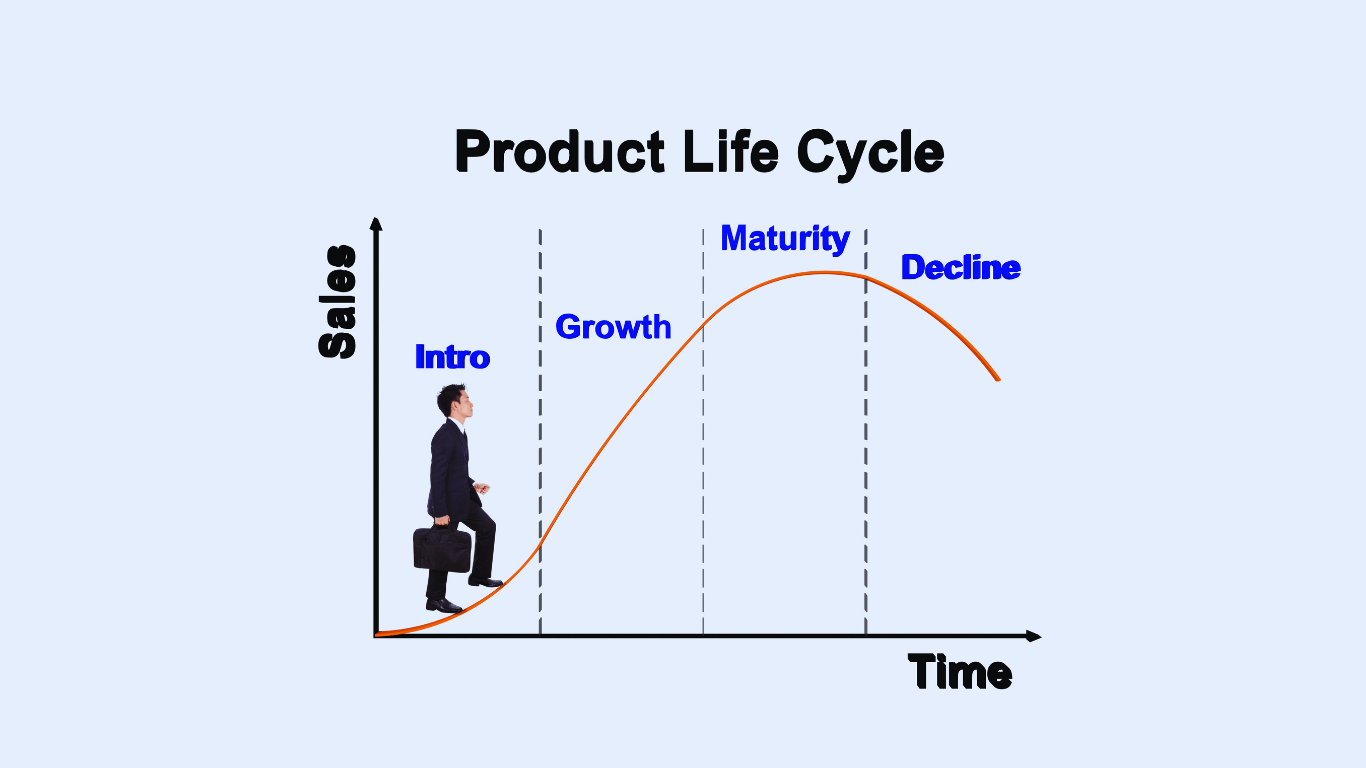
Product Lifecycle Decisions Can Limit Growth Before It Begins
Many businesses think the product lifecycle starts after launch.
In reality, it begins with the very first interaction a potential customer has with your product. If the product doesn’t address a meaningful business problem at that stage, every marketing campaign and every sales conversation becomes significantly more difficult.
Some of the most common reasons products fail to gain traction include:
- Little or no iteration based on customer feedback
- Ignoring customer insights
- Prioritizing features instead of business value
The result is a product that technically exists but never creates consistent demand.
Successful product teams don’t measure progress by the number of features released. They measure it through customer adoption, repeatable sales, and growing market demand. Those indicators reveal whether the product is actually moving closer to Product-Market Fit.
Product-Market Fit Is a Process, Not a Milestone
Many founders think Product-Market Fit is something a company eventually achieves and never has to revisit.
The reality is very different.
Markets evolve, customer expectations change, competitors improve, and buying behavior shifts over time. Product-Market Fit isn’t a single moment—it’s an ongoing process of continuously adapting your product to changing market conditions.
One of the biggest mistakes companies make is confusing interest with Product-Market Fit. Website traffic isn’t Product-Market Fit. Demo requests aren’t Product-Market Fit. Even positive customer feedback isn’t enough.
The strongest evidence comes from measurable business outcomes such as:
- Conversion rates
- Customer retention
- Time to purchase
- Expansion revenue
- Repeatable sales
Those metrics reveal whether customers truly value the product or are simply curious about it. Without measurable customer behavior, it’s impossible to know whether you’ve achieved Product-Market Fit or are simply receiving encouraging feedback that never turns into revenue.

Product-Market Fit Is Proven Through Customer Behavior, Not Presentations
Product-Market Fit often looks convincing in presentations and internal strategy meetings. The real test begins when customers have to make buying decisions. If your team can’t consistently move prospects through the sales process, repeat successful sales conversations, or scale customer acquisition, Product-Market Fit hasn’t been achieved yet.
This is where a well-executed Go-to-Market strategy proves its value. Instead of relying on assumptions or enthusiasm, it forces the product to compete in real market conditions. Every customer conversation becomes another opportunity to validate—or challenge—the original hypothesis. The goal isn’t to prove that the product is good. It’s to understand whether the market believes it’s worth buying.
Measure Product-Market Fit with Data, Not Opinions
Product teams naturally become attached to what they’re building.
The problem is that internal confidence doesn’t always translate into market demand.
That’s why Product-Market Fit should always be evaluated using customer behavior rather than team opinions. The strongest indicators include customer conversations, sales performance, buying decisions, customer retention, and revenue growth. Together, these signals reveal whether customers genuinely value the product or are simply expressing polite interest.
Many companies continue adding new features because they believe the product is “almost there.” In reality, the market may already be showing that the biggest issue isn’t functionality but positioning, pricing, messaging, or audience selection. Customer behavior should always outweigh internal assumptions because customers—not product teams—ultimately decide whether a product succeeds.
Use a Product-Market Fit Framework to Make Better Decisions
Many organizations create Product-Market Fit frameworks that look impressive during planning sessions but have little impact on day-to-day decisions.
A Product-Market Fit framework becomes valuable only when it helps answer practical questions such as:
- Which features deserve further investment?
- Which ideas should be removed from the roadmap?
- Which customer segments should receive greater attention?
- Which markets are worth expanding into?
Without influencing product decisions, it’s simply another presentation slide. Used correctly, however, it becomes a decision-making framework that helps teams prioritize work that strengthens market fit instead of investing in features customers never requested.
Customer Expectations Should Shape the Product Before Launch
Customer expectations shouldn’t be analyzed only after launch. They determine whether a product has a realistic chance of succeeding in the first place.
Customers don’t compare your product with your vision. They compare it with the way they already solve the problem today—whether that’s Excel, another software platform, an agency, an internal process, or simply accepting the problem as part of daily operations.
For customers to switch, your product must deliver a clearly better outcome, reduce effort, lower risk, or help them achieve results faster. That’s why understanding customer expectations before launch is essential. Waiting until after release often means discovering too late that the biggest obstacle isn’t the product itself but pricing, onboarding complexity, implementation effort, or unclear messaging.
Another common mistake is treating customer expectations as nothing more than a feature checklist. Customers rarely buy features for their own sake. They buy less operational complexity, faster execution, lower business risk, greater predictability, and better business outcomes.
Product-Market Fit isn’t measured by whether prospects say the product looks interesting. It’s measured by whether they immediately understand why changing their current way of working is worth the effort. When prospects repeatedly ask “Who is this for?”, “How is it different?”, or “When will we see results?”, the problem usually isn’t sales. It’s a value proposition that hasn’t yet been aligned with the way customers actually make purchasing decisions.
Customer Experience Influences Sales Long Before the Purchase
Many companies treat user experience (UX) and customer satisfaction as post-sale priorities. In reality, they influence purchasing decisions much earlier.
Customers begin evaluating the experience during the first product demo, free trial, onboarding, and even their first interaction with your website. If it takes too long to understand the product, if onboarding feels overly complicated, or if customers struggle to reach their first meaningful outcome, conversion rates inevitably decline.
The biggest friction points rarely involve missing functionality. More often, they’re caused by slow onboarding, unclear value, confusing navigation, or an implementation process that appears too risky. These barriers directly influence buying decisions because prospects begin questioning whether adopting the product will require more effort than it’s worth.
A customer-centric product isn’t defined by polished design alone. It’s designed to remove the obstacles that prevent customers from buying in the first place. That’s why UX and customer satisfaction should be viewed as essential parts of your Go-to-Market strategy rather than improvements to consider after launch.
A Minimum Viable Product Should Validate Demand, Not Features
Many founders misunderstand the purpose of a Minimum Viable Product (MVP).
An MVP isn’t an excuse to launch an unfinished product. Its purpose is to validate whether the market sees enough value to justify a conversation, a trial, or ultimately a purchase. The most important question isn’t “Did we build something?” It’s “Will this change customer behavior?”
That’s a crucial distinction because many product teams mistake development activity for business progress. It’s entirely possible to have a polished demo, a professional landing page, and early users while still having no evidence that customers are willing to buy.
A well-executed Go-to-Market strategy introduces discipline into this process. Your MVP should be tested with a clearly defined customer segment, a specific value proposition, and a realistic use case. Otherwise, the feedback quickly becomes inconsistent. One prospect asks for additional features, another says the pricing is too high, while a third promises to revisit the product in a few months. None of those responses provide meaningful direction unless you know exactly who you’re targeting, which problem you’re testing, and what customer behavior would confirm genuine market demand.
An MVP Is Part of the Product Launch Process, Not the Final Product
An MVP isn’t a smaller version of the finished product. It’s an early stage of the product launch process designed to shorten the time between building and learning.
The objective isn’t to release every planned feature. It’s to demonstrate enough value that customers immediately recognize a real business problem worth solving. Testing isolated features rarely produces meaningful insights because customers don’t buy individual features—they buy solutions that improve outcomes.
An MVP should therefore be connected to the buying process rather than the product roadmap alone. The real questions are straightforward:
- Can you attract qualified prospects?
- Do they immediately understand the offer?
- Are they interested enough to continue the conversation?
- Are they willing to move toward a purchase?
The answers provide much stronger evidence of Product-Market Fit than feature requests alone. Without that discipline, companies often spend months refining an MVP when the real problem lies elsewhere—in positioning, pricing, messaging, or selecting the wrong customer segment.
Product Development Should Follow Market Evidence
Building new features without market validation quickly turns product development into an exercise in guesswork. The roadmap grows longer, engineering teams stay busy, yet the sales pipeline doesn’t improve.
This is one of the most expensive mistakes companies make while pursuing Product-Market Fit. They continue investing in product development before understanding which changes actually improve conversion rates, customer retention, or buying intent.
Every significant product decision should answer one simple question:
Will this make customers more likely to buy?
More specifically:
- Does it remove a buying objection?
- Does it shorten time to value?
- Does it increase product adoption?
- Does it strengthen our competitive advantage?
If the answer is “We’re not sure,” the decision is probably driven by assumptions rather than evidence.
The companies that reach Product-Market Fit fastest don’t build the most features. They build the features that remove the biggest barriers to adoption, validate those decisions through customer behavior, and continuously improve the product using measurable business outcomes instead of internal opinions.
Build Products That Fit the Market Instead of Building More Features
Building products is relatively easy.
Building a product that truly fits the market is much harder.
Developing new functionality creates a sense of progress because the roadmap keeps moving forward. Achieving Product-Market Fit requires accepting that some original assumptions may have been wrong.
That’s why companies lose time when they react to every piece of customer feedback individually. One customer requests a new feature, so the team adds it. Another complains about pricing, so discounts are introduced. Sales says prospects don’t understand the product, so marketing rewrites the messaging.
The problem is that individual comments shouldn’t dictate product strategy.
The real objective is identifying patterns:
- Which objections appear repeatedly?
- Which features actually influence buying decisions?
- Which customer segments convert more quickly?
- Where does Product-Market Fit become repeatable?
Only then does iteration become a strategic business decision rather than a series of disconnected product updates.
Product Validation Begins with Sales, Not Marketing
This is the stage where theory ends.
Product validation reveals whether the value your team believes it has created actually exists from the customer’s perspective. The objective isn’t to measure ad clicks, demo requests, or website traffic. What matters is whether customers take actions that require real commitment—starting a conversation, signing up for a trial, moving through implementation, or making a purchase.
Without those signals, there’s no reliable evidence that the market truly wants the product.
One of the most expensive mistakes companies make is treating validation as something that happens before sales. In reality, sales is one of the most valuable validation tools available. If prospects consistently fail to move through a realistic buying process or early customers can’t be converted into repeatable sales, Product-Market Fit hasn’t been achieved yet.
At that point, the issue usually isn’t the sales team. More often, it’s the product itself, the positioning, or the customer segment being targeted.

Product Validation Should Be Part of Your Go-to-Market Strategy
A strong Go-to-Market strategy doesn’t test products in artificial environments. It recreates the same conditions customers will experience after launch.
That means validating your product using:
- Real acquisition channels
- Real pricing
- A real sales process
Testing under ideal conditions often produces misleading results. People are usually happy to try something for free or express interest when there’s no commitment involved. Paying for a product is a completely different decision.
That’s why product validation should be treated as a structured business experiment. Every test needs a clearly defined customer segment, a specific value hypothesis, and measurable success criteria. Without that structure, companies end up collecting random opinions instead of making informed product decisions.
Collect Customer Feedback That Leads to Better Decisions
Asking customers “What do you think about the product?” rarely produces useful insights.
Most people respond politely, but those answers don’t explain why they ultimately decide to buy—or why they don’t.
The most valuable feedback always has context.
Questions such as:
- What made you start looking for a new solution?
- What influenced your decision the most?
- What nearly stopped you from buying?
provide much stronger signals than general opinions.
Customer feedback should also be collected at the key moments of the buying journey. Understanding how prospects react during product discovery, onboarding, evaluation, and the decision-making process reveals where the greatest friction exists.
Those moments expose the gaps between your assumptions and the customer’s actual experience.
Customer Feedback Matters—But Sales Data Matters More
Customer opinions are useful.
Customer behavior is decisive.
A prospect may tell you the product looks impressive and still decide not to buy it. That’s not positive feedback—it’s evidence that the perceived value isn’t strong enough or the problem doesn’t feel urgent enough.
This is why Product-Market Fit should always be evaluated through customer actions rather than customer compliments.
The questions that matter most are simple:
- Do customers return?
- Do they continue moving through the sales process?
- Are they willing to pay?
Those behaviors provide far more reliable evidence than surveys or interviews alone.
Product-Market Fit isn’t defined by how positively people speak about your product.
It’s defined by whether they consistently choose it.
Marketing Should Validate Demand Before It Tries to Scale It
During the Product-Market Fit stage, marketing isn’t primarily responsible for driving growth. Its first job is to validate demand. Digital marketing becomes a tool for collecting market signals rather than simply generating leads. One of the biggest mistakes companies make is launching broad campaigns before they’ve identified a clear customer segment or refined their value proposition. The outcome is predictable: traffic increases, conversions remain low, and the team concludes that the product isn’t ready.
In many cases, however, the product isn’t the problem. The messaging is. Or the targeting. That’s why early-stage marketing should focus less on reach and more on learning. The objective is to discover which message resonates, which audience responds, and which problems create enough urgency for customers to take action.

Product Marketing Should Focus on Precision, Not Reach
At this stage, product marketing works best when it’s highly focused. Reaching one hundred highly qualified prospects is far more valuable than attracting ten thousand people who have little interest in the product. Every marketing activity should answer one simple question:
Does this message make the right customer want to learn more?
Metrics such as click-through rates and website traffic provide useful context, but they don’t determine whether Product-Market Fit exists. More meaningful indicators include:
- Lead quality
- Sales conversations generated
- Progression through the sales pipeline
- Customer conversion rates
These metrics reveal whether marketing is helping the business move closer to Product-Market Fit rather than simply increasing visibility.
Position the Product Around a Specific Use Case
Early positioning shouldn’t try to appeal to everyone. The strongest Go-to-Market strategies position the product around one clearly defined customer, one specific problem, and one compelling use case. That clarity makes buying decisions much easier because prospects either recognize themselves immediately—or they don’t.
Surprisingly, that’s a good outcome. A quick “no” is just as valuable as a “yes” because it helps the team understand exactly where the product fits and where it doesn’t. Narrow positioning accelerates learning, improves messaging, and creates a much faster path toward Product-Market Fit. Broad positioning may generate more traffic, but it usually creates more confusion than demand.
Great Marketing Can’t Compensate for Weak Product-Market Fit
Many companies assume that increasing the marketing budget will solve slow growth. In reality, scaling marketing before achieving Product-Market Fit usually scales the problem instead. If conversion rates are weak with a small audience, increasing ad spend rarely changes the outcome. It simply brings more people into a funnel that isn’t working yet.
This is why successful product launches depend less on creative campaigns and more on whether the messaging genuinely reflects market needs. Strong marketing amplifies an existing value proposition—it doesn’t create one. When customers immediately recognize the problem your product solves, marketing becomes significantly more effective because demand already exists.
Sales Is the Ultimate Test of Product-Market Fit
No customer interview, market report, or advertising campaign provides stronger evidence than an actual sales conversation. Sales is where Product-Market Fit is tested under real market conditions. A product demonstrates genuine market fit when prospects consistently understand the value, move through the buying process, and become paying customers. One successful deal proves very little. Repeatable sales across similar customers reveal whether the product has reached Product-Market Fit.
This is where Go-to-Market connects every part of the business. Marketing attracts the right audience, sales validates buying intent, and the product delivers the promised value. If any of those elements fail, growth becomes difficult to scale. Companies that reach Product-Market Fit don’t convince every customer to buy—they build a product that the right customers already want.
Repeatable Sales Are the Clearest Sign of Product-Market Fit
Product-Market Fit isn’t measured by a single successful deal or one enthusiastic customer. It becomes visible when similar customers consistently respond in the same way, move through the buying process with predictable patterns, and make purchasing decisions without requiring a completely different sales approach every time.
Repeatability is what separates an early success from a scalable business. If every deal depends on unique circumstances, extensive customization, or exceptional effort from the sales team, the company hasn’t reached Product-Market Fit yet. Sustainable growth begins only when customer acquisition becomes predictable rather than dependent on individual wins.
Go-to-Market Connects Product Launch and the Sales Process
Many companies treat product development and sales as two separate functions.
In reality, they’re part of the same system.
A Go-to-Market strategy connects:
- Marketing, which attracts potential customers
- Sales, which guides buying decisions
- The product, which delivers the promised value
When these functions work together, the customer experience becomes consistent from the first interaction through onboarding and long-term adoption. When they operate independently, teams often blame one another for weak results while the real problem lies in the lack of alignment.
A successful product launch doesn’t end when the product becomes available. It continues through every stage of the customer journey, ensuring that marketing creates demand, sales validates demand, and the product consistently fulfills customer expectations.

Product-Market Fit Exists When Customers No Longer Need Convincing
At the end of the day, everything comes back to one question:
Does your value proposition solve a problem customers genuinely care about?
When the answer is yes, sales conversations become noticeably easier. Prospects quickly understand the value, ask practical implementation questions, and move naturally toward a purchasing decision.
When the answer is no, every stage of the sales process becomes a struggle. Marketing has to work harder to generate interest, sales spends more time overcoming objections, and pricing becomes a constant source of negotiation.
One of the simplest ways to recognize Product-Market Fit is to observe how much persuasion is required. If customers immediately recognize the problem and believe your solution is worth paying for, you’ve created the conditions for sustainable growth. If every deal requires extensive convincing, the product, positioning, or target market probably still needs refinement.
Conclusion
Product-Market Fit isn’t something companies achieve through intuition or internal optimism. It’s earned through continuous testing, customer conversations, measurable buying behavior, and a disciplined Go-to-Market strategy.
The businesses that reach Product-Market Fit fastest aren’t necessarily the ones with the most advanced products. They’re the ones that learn faster than their competitors, adapt their messaging, refine their positioning, and make decisions based on market evidence instead of assumptions.
A successful Go-to-Market strategy brings product, marketing, and sales together into one system. When those elements reinforce one another, companies can launch products with greater confidence, scale customer acquisition more predictably, and build long-term, sustainable growth.